Our first dealership couldn't add a photo.
I stopped guessing what sellers were seeing, and built a way to see it for myself.
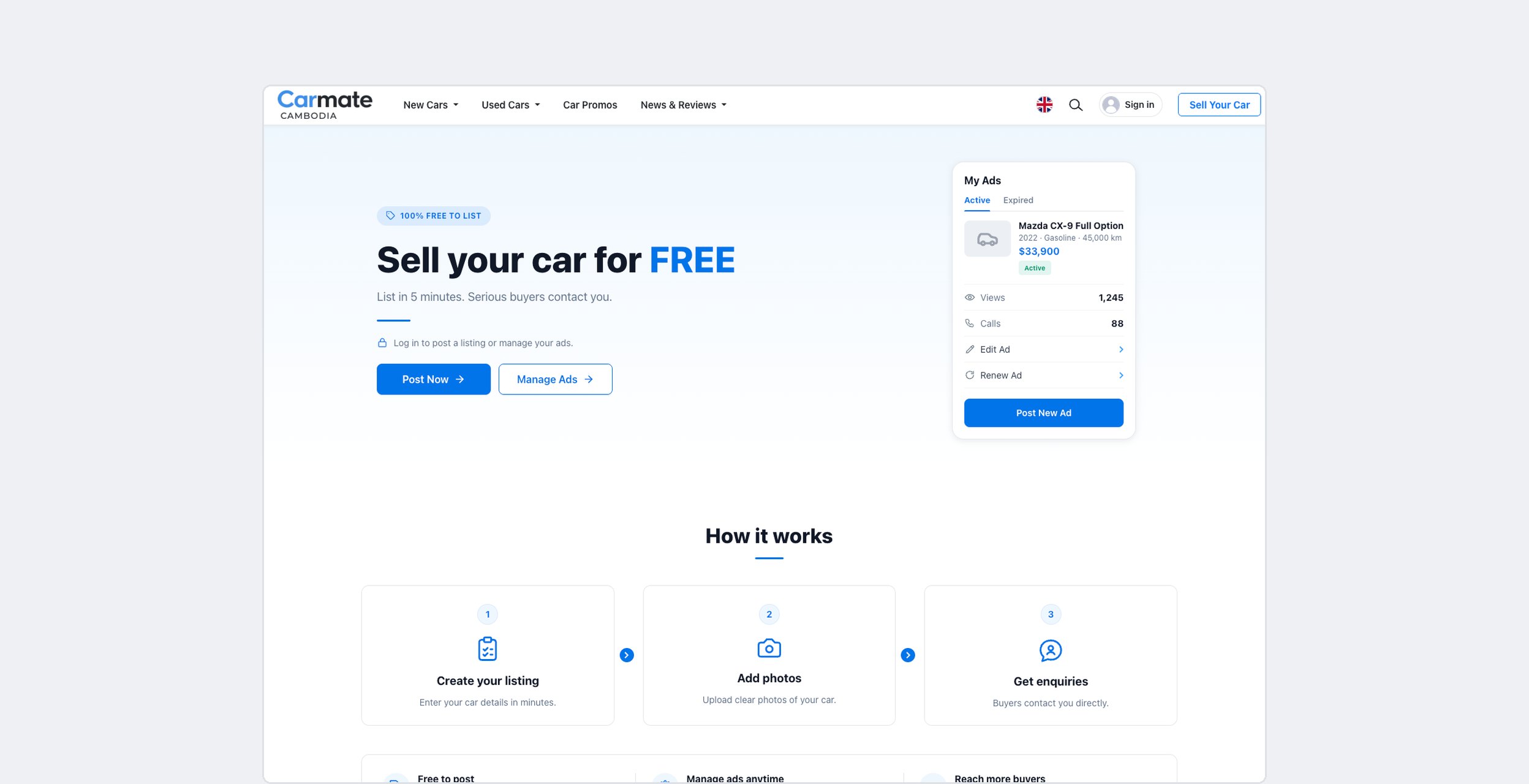
Users new to the web
Most of our sellers grew up on Facebook, not on websites. They bring its habits with them. Things I assumed were obvious often weren't, and I couldn't design around problems I never saw.
Simple tasks failed
When our first dealership started using the seller tools, staff couldn't add photos. They typed the dealership's details into their personal profile instead of the dealership's store profile.
And each type of seller sees a different version of the product. From my own account, I couldn't see what they saw.
See exactly what they see
I built a way for our team to log in to a seller's account. It shows the product exactly as that seller sees it: where they get stuck, and bugs that only appear for their type of account.
When a seller is stuck, we can also finish the task with them instead of losing them.
[Who can use it, and how each use is recorded]
“Design for the mistake, not the ideal user.”
People weren't careless. They were using habits from the apps they knew on a kind of product they had never used. Every mistake was information about the design.
Small fixes, found by watching
Acting on the first signal
So far this is one dealership, and I'd rather say so. I didn't wait for the same mistake to repeat across many sellers before fixing it. Each problem the first dealership hit now has a fix in the product, before the next seller arrives.
[A number if you have one — e.g. listings the dealership has posted, or time to set up]
What I'd do differently
I'd build the way to see what sellers see before the first seller signs up, not after. It's the cheapest research tool we have.