The launch date was fixed. Half the platform wasn't connected.
Close to launching our lead-based platform, the build had stalled. I stepped in, filled the gaps, and rebuilt the part brands would touch most: promotions.
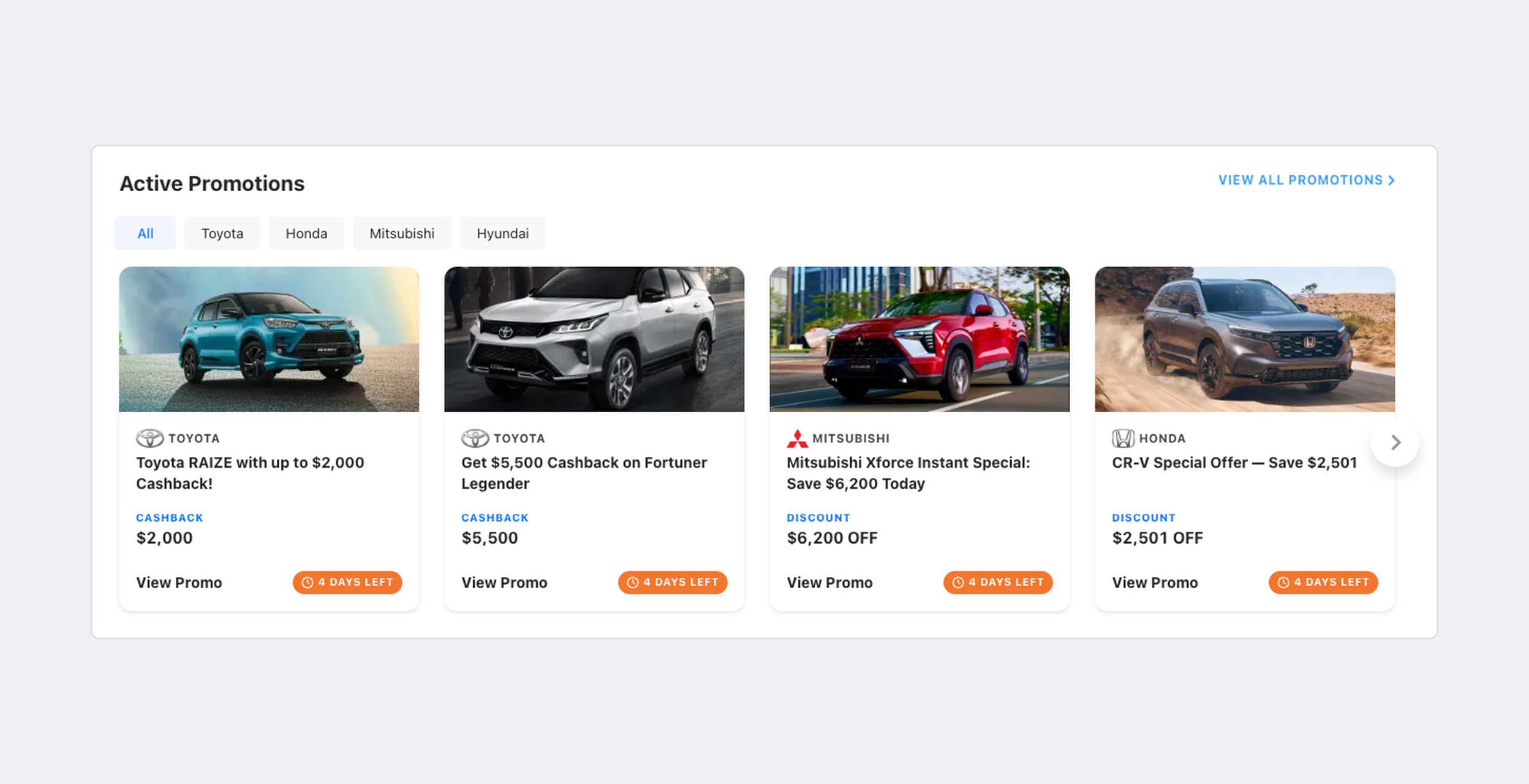
A launch with holes in it
We had moved Carmate to a lead-based model, and the new platform had a launch date. As it got close, the build had stalled. Pages weren't linked to each other, parts of the logic were wrong or missing, and some pages didn't exist yet.
Fill the gaps myself
Waiting was the safe option. I took the risk of working directly in code I hadn't written, guided by years of knowing how the product should behave. I redesigned pages, fixed the logic that ties listings, articles and model pages together, and built what was missing from scratch:
A promotion tool nobody would use
Seller Central only let brands create a promotion for a single trim. But I had been collecting brands' promotion posters, and they never work that way. It's a model name and “−$3,000”. Even brand staff often don't know their exact trim names.
And in Cambodia, promotions are paid ads that run and quietly disappear. Nobody tracks them, so nobody takes them seriously. A tool that didn't match how brands already think would never be used.
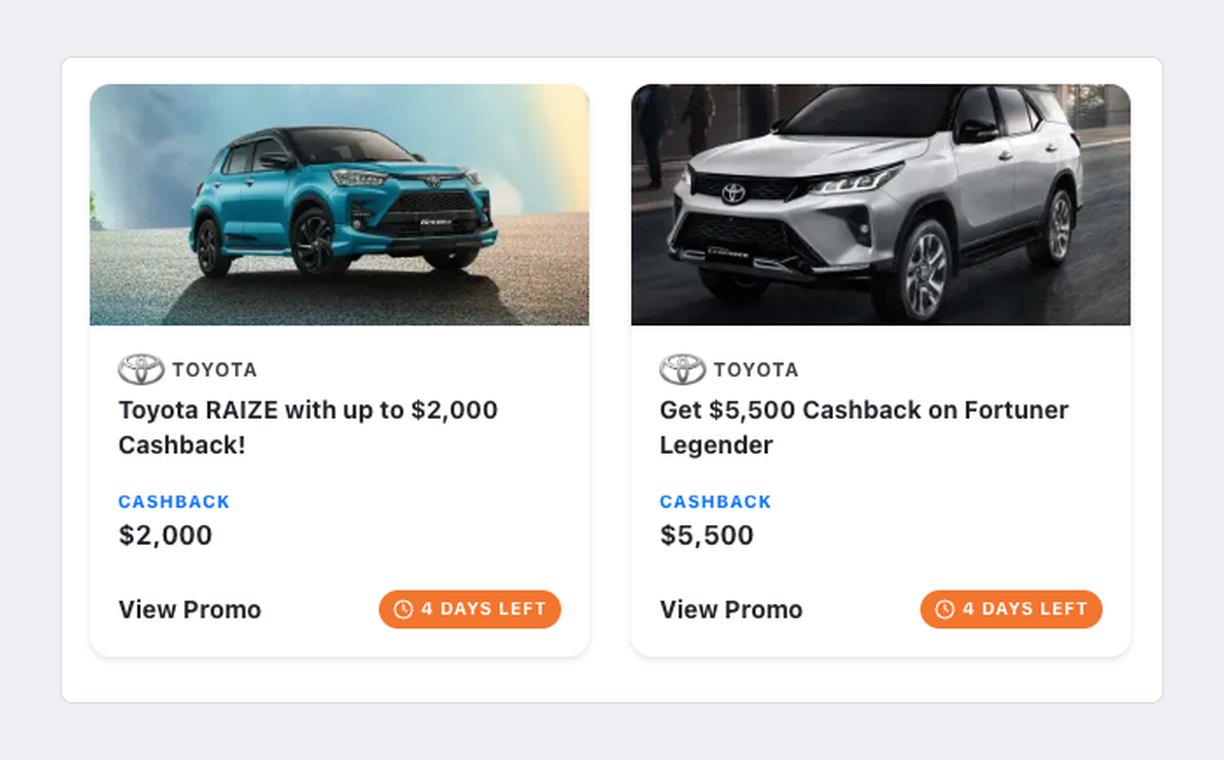
“Build promotions the way brands already sell.”
If brands were going to take our promotions seriously, they had to be right everywhere: the normal price, the promo price and the dates, on every page they touch.
Scope first, then confirm the price
I redrew the flow in Figma and built it myself, working from the data structure underneath.
What about cars already in stock?
When a model is on promotion, its in-stock listings are affected too. Whether a particular car belongs in the offer isn't clear-cut, and it's the brand's call, not ours.
Each affected listing now shows an optional promo price. Staff fill it in only for the cars they want included. Control, not automation, is what makes brands willing to open a promotion.
Launched on schedule
The platform launched with a promotion system built around how brands in Cambodia actually advertise. Since then I have run the whole codebase myself.
What I'd do differently
I'd put the posters in front of the build from day one. The insight about how brands advertise was there before a line of the first promotion tool was written.